Per-resolution AI pricing, explained
Per-resolution pricing charges you for each support ticket your AI closes. The model sounds fair—pay for success—but it inverts incentives: better AI means higher bills. Here's how the $0.50–$2.00 range works, when it wins, and when it backfires.
Last updated June 2026
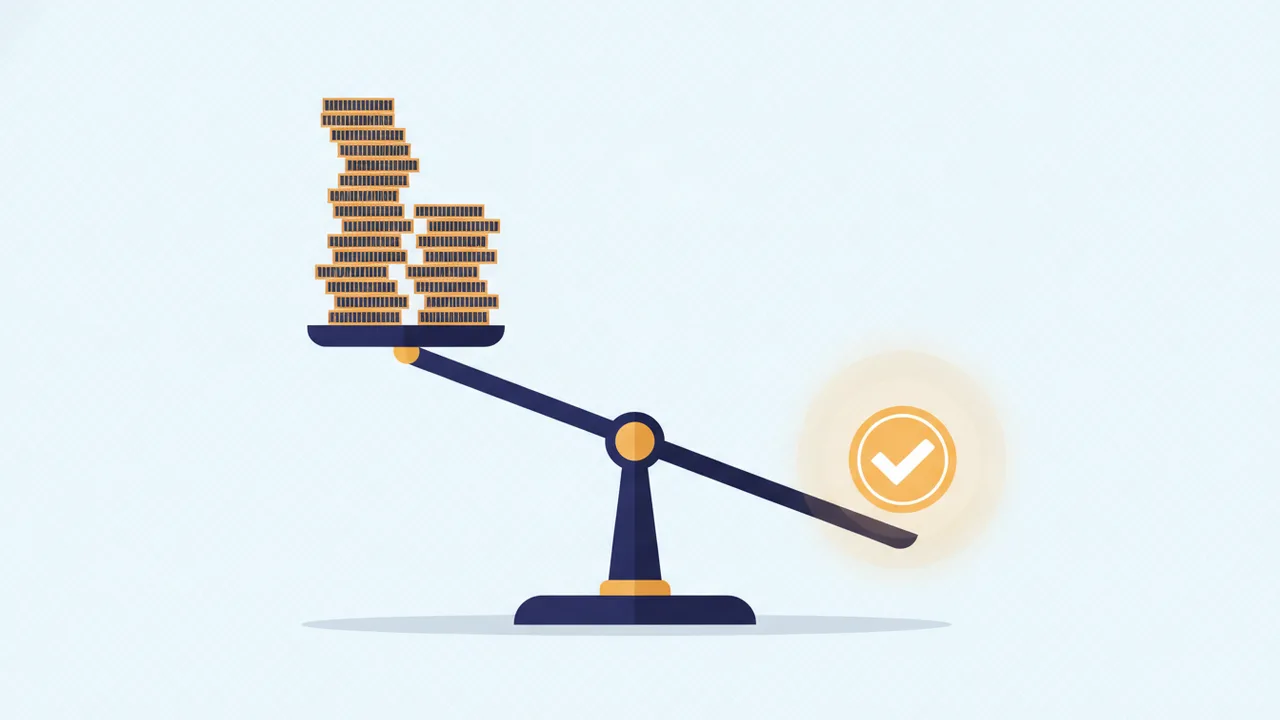
Per-resolution pricing is the customer support equivalent of paying for what you use. You don't buy a seat license or a monthly tier; instead, every ticket your AI resolves costs a fixed amount. The logic is straightforward: better automation = more resolutions = higher fees. In practice, it's a trap for successful teams.
What counts as a "resolution"?
A resolution is a closed ticket or conversation. Most vendors define it simply: the bot handled it end-to-end without escalating to a human. Some platforms are stricter—Intercom counts only conversations closed by the bot *and* not reopened within 24 hours—but the difference is marginal.
A resolution does NOT require customer satisfaction. A bot can close a ticket by sending a generic "we can't help, contact sales" response, and it still counts. Help Scout, Gorgias, and Intercom have higher bars in practice (they filter out quick failures), but technically any closed conversation is billable.
The price range: $0.50 to $2.00
Per-resolution vendors cluster in a tight band:
- HubSpot Breeze: $0.50/resolution (the cheapest, but only for simple ticket automation, not voice).
- Help Scout: $0.75/resolution.
- Intercom Fin: $0.99/resolution (includes escalation routing).
- Gorgias: ~$1.00/resolution (but add-on fees can double this for Shopify stores).
- Zendesk Suite: $1.50/resolution (committed), $2.00+ (pay-as-you-go, usually hidden until you contact sales).
The $0.50 difference between HubSpot and Zendesk might look small, but at 2,000 resolutions/month, that's a $3,000/year gap. The hidden costs are worse: Gorgias charges separate per-ticket and per-automation fees, Zendesk buries PAYG rates, and Salesforce doesn't publish prices at all.
Why better AI makes your bill worse
The core problem with per-resolution pricing is misaligned incentives. When you improve your bot—better training data, smarter routing, broader FAQ coverage—it resolves *more* tickets. Higher success = higher bill. You're penalized for success.
Compare this to per-seat pricing (Freshdesk, Help Scout per-user plan): you pay $25–$75/user/month whether your agents resolve 10 or 100 tickets. Improvement doesn't cost you. Flat-tier pricing (Crisp, Tidio) has the same advantage: you pay $45–$295/month for unlimited usage.
Per-resolution works only if your automation rate is low and stable—say, 5–10% of inbound resolves without human help. Once AI adoption reaches 30–50%, the bill becomes a drag on profitability.
When per-resolution wins: low-volume, low-risk
Per-resolution pricing makes sense for:
- Teams resolving under 300 tickets/month: You pay $150–$300/month instead of $55–$115/seat, which saves money if you'd need two agents on a per-seat plan.
- Pilot programs: Try AI automation without a long-term license commitment. Stop any time.
- Low-touch SaaS support: Knowledge base + chatbot, minimal human escalation. Fixed costs, predictable payoff.
- Risk-free testing: No sunk cost per seat; you only pay for what the bot delivers.
A small e-commerce team with 200 orders/month might resolve 80 support tickets via AI at $0.75/resolution = $60/month. On a per-seat plan, they'd pay $150–$250 for one agent. Per-resolution is the clear winner.
When per-resolution hurts: scaling and success
Per-resolution pricing breaks down as your business grows and your AI improves. Here's a worked example:
| Scenario | Resolutions/mo | HubSpot Breeze | Help Scout | Zendesk ($1.50) | Per-seat (Freshdesk $49) |
|---|---|---|---|---|---|
| Small (starting) | 200 | $100 | $150 | $300 | $49 (1 agent) |
| Growing | 1,000 | $500 | $750 | $1,500 | $98–$147 (2–3 agents) |
| Mature | 2,500 | $1,250 | $1,875 | $3,750 | $245–$294 (5–6 agents) |
At 2,500 resolutions/month, per-resolution costs $1,250–$3,750 depending on the vendor. A per-seat plan with 5 agents costs $245–$294. Per-resolution has become 5–15× more expensive. And because your AI has improved over time, you're paying more to succeed.
Per-conversation vs per-resolution: the hidden gotcha
Some vendors charge per conversation instead of per resolution. This is worse: you pay for every chat or ticket the bot touches, whether it solves anything or not. A conversation that fails to resolve, gets escalated, or times out still costs you. Ada and several voice platforms use this model.
Per-resolution is always preferable to per-conversation. At least you don't pay for failures. But both are worse than per-seat or flat-tier once your automation volume grows.
Hidden per-resolution fees
Some vendors layer per-resolution charges on top of other fees:
- Gorgias: Charges both a per-ticket base fee and a separate "AI Agent automation" fee. Your effective cost can double.
- Zendesk: Publishes $1.50/resolution for committed volume but hides $2.00+ rates for pay-as-you-go behind a sales call.
- Freshdesk: Sells AI automation as an add-on ($49 per 100 sessions, roughly $0.49/resolution), not in the base plan.
Always ask the vendor: "Does this per-resolution price include AI, or are there add-on fees?" and "What's your pay-as-you-go rate?" The sticker price is rarely the final cost.
Comparing per-resolution to other pricing models
Per-seat: Charges $19–$115/agent/month. Cheapest for high-volume teams and scales predictably as you hire. No incentive misalignment.
Flat-tier: Fixed monthly fee ($45–$295) for unlimited usage. Most transparent and best for teams with variable support volume. Crisp, Tidio, and Kommunicate use this.
Per-resolution: Cheapest for teams under 500 resolutions/month, but rapidly becomes the most expensive as you scale.
For most SMBs, per-seat is the safest choice: transparent, aligns incentives, and doesn't penalize success. Flat-tier is ideal if you want unlimited automation without per-resolution surprises.
How to choose: a quick framework
Use per-resolution pricing if:
- You're running a pilot and want to minimize upfront costs.
- Your expected resolution volume is under 400/month.
- Your bot is simple and won't improve dramatically over time.
Choose per-seat or flat-tier if:
- You expect more than 500 resolutions/month.
- You're planning to improve your bot's accuracy over time (and don't want to pay for success).
- You have multiple support staff or plan to hire agents.
- You want a predictable monthly budget.
Use our billing model picker to compare your specific volume and team size, or check the support cost calculator for exact estimates across vendors.
When per-resolution wins
Per-resolution pricing is honest for small teams but backward for growing ones. It penalizes AI improvement and hides incentives that work against you. If your team is below 500 resolutions/month and you want to test automation cheaply, per-resolution is fine. Beyond that, per-seat or flat-tier pricing will save you money and align your incentives with success.
Frequently asked questions
Does "resolution" mean the customer is happy?
Not necessarily. Most vendors count a resolution as any closed ticket or conversation, whether solved, abandoned, or handed off to a human. It's a system state, not a satisfaction metric. Intercom and Help Scout track it more narrowly (ticket closed by bot without escalation), but the bar is still mechanical.
Can I predict my monthly bill with per-resolution pricing?
Only if your resolution volume is stable. A 20% jump in automation success or a seasonal spike in support volume will raise your bill proportionally. Teams using high-accuracy AI find themselves paying more as their bot improves — the opposite incentive from per-seat pricing.
Is per-resolution cheaper than per-seat for small teams?
Yes, if you resolve fewer than 400–600 tickets/month with an AI bot. Below that volume, per-resolution ($200–1,200/mo) beats per-seat agents ($55–115/seat/mo). Above 1,000 resolutions/mo, per-seat becomes cheaper and more predictable.
What about hidden per-resolution charges?
Gorgias bills both a per-ticket fee and a separate automation fee, which can double your effective resolution cost. Always check the vendor's support page for "automation add-ons" or "AI markup" before committing.
Keep reading
Get the AI pricing-change brief
AI vendors change pricing constantly: HubSpot cut its rate, Freshdesk 5×’d its session fee, Drift got sunset. Get an occasional, plain-English note when a price or program changes. No spam. Unsubscribe anytime. We never share your email.