Per-conversation vs per-resolution: the trap
Per-conversation billing charges you every time the AI touches a ticket—even if it fails. Per-resolution charges only on success. At the same headline rate, per-conversation will cost 2–3× more.
Last updated June 2026
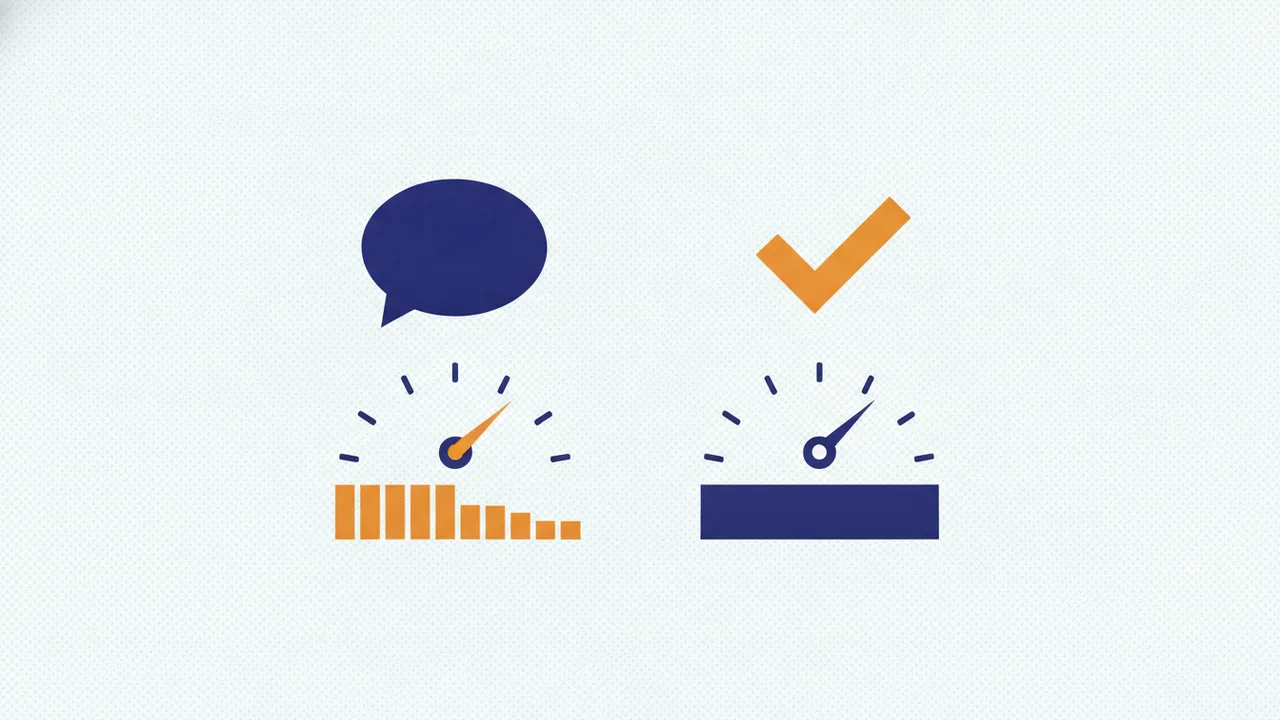
The choice between per-conversation and per-resolution billing looks simple until you do the math. One charges you for every interaction a chatbot has with a customer. The other charges only when the bot solves the problem. The names sound neutral, but one systematically costs you more.
The core difference
Per-conversation charges every time the AI engages with a ticket or customer. That includes:
- Interactions that fully solve the problem (resolution).
- Conversations that loop three times and then escalate to a human.
- Failed attempts where the bot gives up.
- Even the same ticket reopened by a frustrated customer.
Per-resolution charges only when the AI closes the ticket without human intervention. No conversation, no charge. Escalations and failures are free.
On a spreadsheet, the names sound equivalent. In practice, they're not. Per-resolution aligns the vendor's incentive with yours: the vendor makes money only when the bot works. Per-conversation makes the vendor money whether the bot works or not.
Real pricing: the math
Assume your team gets 1,000 customer conversations per month. Industry FCR (first-contact resolution) for AI is 65–70%. That means:
- 650–700 conversations result in a resolution.
- 300–350 require escalation, looping, or failure.
Here's what you'd pay under each model:
| Vendor / Model | Rate | Monthly cost (1,000 conversations, 65% FCR) |
|---|---|---|
| HubSpot Breeze (per-resolution) | $0.50/resolution | $325 (650 resolutions) |
| Help Scout (per-resolution) | $0.75/resolution | $488 (650 resolutions) |
| Intercom Fin (per-resolution) | $0.99/resolution | $644 (650 resolutions) |
| Ada (per-conversation) | ~$0.60/interaction (estimated) | $600 (1,000 conversations) |
| Kustomer bots (per-conversation) | ~$0.60/interaction (estimated) | $600 (1,000 conversations) |
| Salesforce Service Cloud (per-session) | $2/24h session | $2,000+ (varies by session length) |
Even when Ada or Kustomer appear cheaper on the headline rate ($0.60 vs $0.50–$0.75), the per-conversation model inflates the bill because you're paying for every interaction, not every win. The gap widens if your FCR is lower than 65%—say 55% or 60%. Suddenly per-conversation becomes clearly worse.
The vendors behind each model
Per-conversation: Ada, Kustomer (bots), Salesforce (per session), Decagon, Sierra, PolyAI. Most of these vendors don't publish rates at all, which is its own red flag—they want to hide the true cost from you until after the demo.
Per-resolution: HubSpot Breeze, Help Scout, Intercom Fin, Gorgias (per ticket, plus agent fee). These vendors are transparent because the model is favorable to buyers. HubSpot even cut Breeze to $0.50/resolution in April 2026, signaling conviction in outcome-based pricing.
Mixed or hybrid: Freshdesk's AI automation rose to $49 per 100 sessions (roughly $0.49 per session) in 2026—an odd middle ground that penalizes conversation length. Zendesk committed to per-resolution but hides the actual rate behind sales. Drift (being sunset) used per-conversation; its successor 1mind is still opaque.
When per-conversation could make sense
Per-conversation is only defensible if the rate is dramatically lower. A rough rule: you'd need per-conversation to cost 60–70% of the per-resolution alternative to break even.
Example:
- Per-resolution vendor (Intercom) costs $0.99/resolution.
- Per-conversation alternative would need to be $0.30–$0.40/interaction to justify the trade-off.
In the market, you almost never see that gap. Ada and Kustomer don't publish rates, so you can't compare. And when you negotiate behind closed doors, they rarely concede enough on the per-interaction rate to offset the volume multiplier.
Hidden gotchas
Salesforce's per-session trap: Salesforce charges $2 per 24-hour session, regardless of how many conversations or resolutions happen in that window. If a customer opens a ticket, closes it, reopens it the same day, you're charged once. But if they open a new session tomorrow, you're charged again. The math depends entirely on session patterns, which are unpredictable.
Escalation penalties: Under per-conversation, escalations cost you twice—once for the bot's failed attempt, and again when a human picks it up (if they're on a per-seat plan). Per-resolution vendors don't charge for the bot attempt, only for human escalations that need a seat.
Kustomer's 8-seat minimum: Kustomer's bot pricing looks affordable until you realize there's an annual 8-seat minimum for the platform. The bot becomes free if you're already paying for seats, but it's a hidden floor for smaller teams.
How to compare in a demo
If you're evaluating vendors and they won't commit to per-resolution, ask this:
- What's the effective cost per conversation at your current FCR? (They'll calculate it; it shows the true multiplier.)
- What's the guaranteed rate for the first 12 months? (Lock it in, don't assume it stays flat.)
- How is FCR measured and audited? (Per-conversation vendors sometimes count "escalated to human" as a partial resolution to hide the cost.)
- Can I buy a per-resolution contract instead? (Some vendors offer it; some refuse.)
Use the support cost calculator to plug in your expected volume and FCR, then compare the outcomes under both models. Or build a simple spreadsheet: (monthly conversations ÷ your FCR) × per-resolution rate vs. monthly conversations × per-conversation rate.
Which model to pick
Per-conversation billing is strictly worse for buyers when the rates are equal. It charges you for failure, looping, and escalations—exactly the things per-resolution avoids. The only scenario where it wins is if the per-interaction rate is 60–70% cheaper, and the market rarely offers that discount. If a vendor insists on per-conversation and won't drop the rate, that's usually a sign they're betting on your resolution rate being lower than you think—or they're hiding the cost until after you're locked in. Move on to vendors offering per-resolution or negotiate hard for a hybrid: a guaranteed per-resolution rate with per-conversation as a fallback if FCR underperforms.
Frequently asked questions
Why is per-conversation worse if the per-minute rate is the same?
Per-conversation counts every interaction—including ones that fail, loop back, or get escalated to a human. Per-resolution only charges when the bot actually solves the issue. At identical headline rates, per-conversation will cost you 2–3× more in real spend because of all the wasted interactions.
What rate would make per-conversation worth it?
You'd need to see per-conversation rates at least 60–70% below the per-resolution alternative. If Help Scout's Zen costs $0.75/resolution and Kustomer charges per-conversation, Kustomer would need to be below $0.25–$0.30/interaction to make sense. That gap rarely closes in the real market.
Can I estimate my own per-conversation cost before signing?
Yes, use this rough math: (monthly resolution volume ÷ 0.65) × the per-conversation rate. The 0.65 assumes a 65% first-contact resolution rate; if your rate is higher, the divisor goes up. Then compare to per-resolution pricing from Help Scout, Intercom, or HubSpot to see the real difference.
Are there any vendors who publish both per-conversation and per-resolution rates so I can compare?
Not in the market yet. Ada, Kustomer, and Salesforce hide behind per-conversation; Help Scout, Intercom, and HubSpot use per-resolution exclusively. This is why comparing requires building your own baseline from your FCR rate and actual deflection history.
Keep reading
Get the AI pricing-change brief
AI vendors change pricing constantly: HubSpot cut its rate, Freshdesk 5×’d its session fee, Drift got sunset. Get an occasional, plain-English note when a price or program changes. No spam. Unsubscribe anytime. We never share your email.